
Advancing the peacebuilding field through stronger evidence and standards
AfP achieves this by:
Grounding Policy and Programs in Actionable Evidence
AfP translates complex findings into accessible formats, such as policy briefs and panel discussions, tailored for practitioners, donors, and policymakers. By elevating credible evidence in working groups, coalitions, and global fora, AfP helps shape donor priorities, legislative frameworks, and future research agendas. The Eirene Peacebuilding Database is a pioneering effort to map indicators across the peacebuilding field.
Socialize Monitoring, Evaluation, Research, and Learning Standards
Establishing standards of practice is essential to furthering the peacebuilding sector. By helping embed these standards into the practices of researchers, practitioners, donors, and policymakers, AfP promotes the reduction of duplication, enhances accountability, and upholds a culture of adaptive learning across the field.
Increase Learning and Collaboration Across Sectors
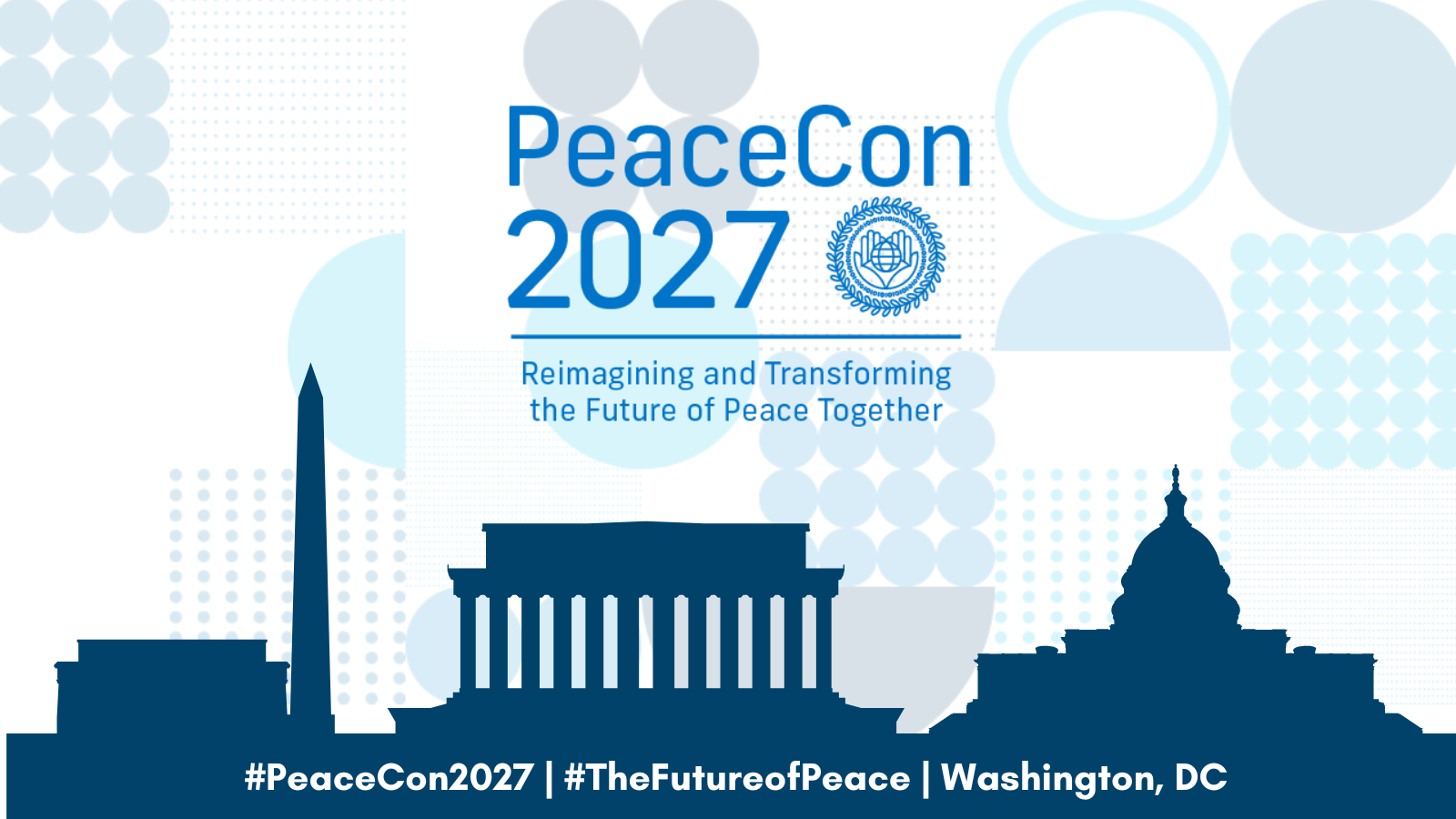
AfP fosters cross-learning with overlapping and adjacent fields to identify shared challenges and transferable solutions. Increasing learning and collaboration across sectors enables us to spot emerging issues and mobilize diverse expertise to help shape and guide the development of nascent fields. AfP’s flagship platform for cross-learning and partnerships is PeaceCon, its annual conference and the largest global gathering of peacebuilders in the United States. See AfP’s cross-sector initiatives below.


Latest L&E publications


notable Past Programs
-
This ground-breaking initiative seeks to foster an evidence-based approach to develop more effective inter-religious action as an important contributor to the peacebuilding and development sectors. The Effective Inter-religious Action in Peacebuilding Program (EIAP II) is focused on two main areas to achieve this critical culture shift in the inter-religious sector.
Improving DM&E Capacity AfP is working with organizations to enhance their skills to effectively design, monitor, and evaluate their programs through our Inter-Religious Peacebuilding Design and Monitoring (PDM) Training and Peer Learning Community.
Building Connections Creating opportunities and space to build partnerships between faith based and secular peacebuilding programs, organizations, evaluators, and researchers to improve collaboration and push us towards greater evidence-based programming in the inter-religious action sector.
Learn more here.
-
USAID’s Bureau for Conflict Prevention and Stabilization (CPS) and Center for Violence Prevention (CVP) partnered with the Alliance for Peacebuilding (AfP), American Institutes for Research (AIR) and the Armed Conflict Location and Event Data Project (ACLED) to co-create and implement a learning agenda that establishes the evidence base for effective approaches to armed conflict and violence (AC&V) prevention; identifies opportunities for AC&V investments that would produce new knowledge; and provides USAID staff with events, tools, resources, and guidance to incorporate learning agenda findings into their work.
The project team pursued an intensive stakeholder engagement process with USAID/DC and mission staff working across AC&V, education, food security, health, rule of law, and humanitarian assistance issues, ultimately arriving at six learning agenda questions, including themes of:
Conflict sensitive peacebuilding;
Conflict sensitivity and integration;
Conflict and violence prevention;
Preventing and countering violent extremism;
Monitoring, evaluation, and learning; and
Climate security.
To thoroughly address each of these themes, the project team conducted intensive evidence reviews, culminating in sixteen technical reports and briefs.
Learn more here.
-
The Peacebuilding Evaluation Consortium (PEC) was a field-wide response to address the unique challenges to measuring and learning from peacebuilding programs. The PEC was funded through the generous support of the Carnegie Corporation of New York across three grants from 2011 - 2019. As PEC efforts concluded in early 2019, the legacy of the PEC boasts a long list of learning activities, learning products, and resources, including the development of the DM&E for Peace learning platform that continue to influence the sector.
Learn more here.
-
AfP raised the bar for peacebuilding practice by setting minimal standards for peacebuilding DM&E across the field. We built on existing efforts to validate these standards and work towards adopting and integrating them across the field through capacity building initiatives.
AfP’s #CreativityInCrisis video series highlights innovative, local, and practical solutions to global DM&E challenges. This series allows AfP to spotlight creative research methodologies, novel solutions to complex problems; while at the same time amplifying voices from the frontlines and creating a culture of shared learning.Learn more here.
-
AfP works to develop a peacebuilding evidence base to ensure better policies and practices for our field. We create and curate evidence around peacebuilding practices to support field-wide achievement of shared outcomes through our pioneering research efforts. These research efforts involve both AfP-led, joint, and supported research, focused on identifying and addressing current research gaps for the field.
AfP’s Research Talks with L&E summarized new research. Key findings are synthesized into short blog posts and discuss key implications for the field - from connecting new research to programming, practice, or other key endeavors.
Learn more here.
-
AfP works to advance the field of interreligious dialogue, by facilitating the Peer Learning Community for Evaluation of Interr-eligious Dialogue Initiatives (PLC), in partnership with Porticus.
By fostering peer to peer relationships, building knowledge of best practices, identifying and addressing challenges in interreligious dialogue and DM&E of interreligious dialogues we strengthened Design, Monitoring and Evaluation (DM&E) capacity and efforts of our partner organizations.
Learn more here.